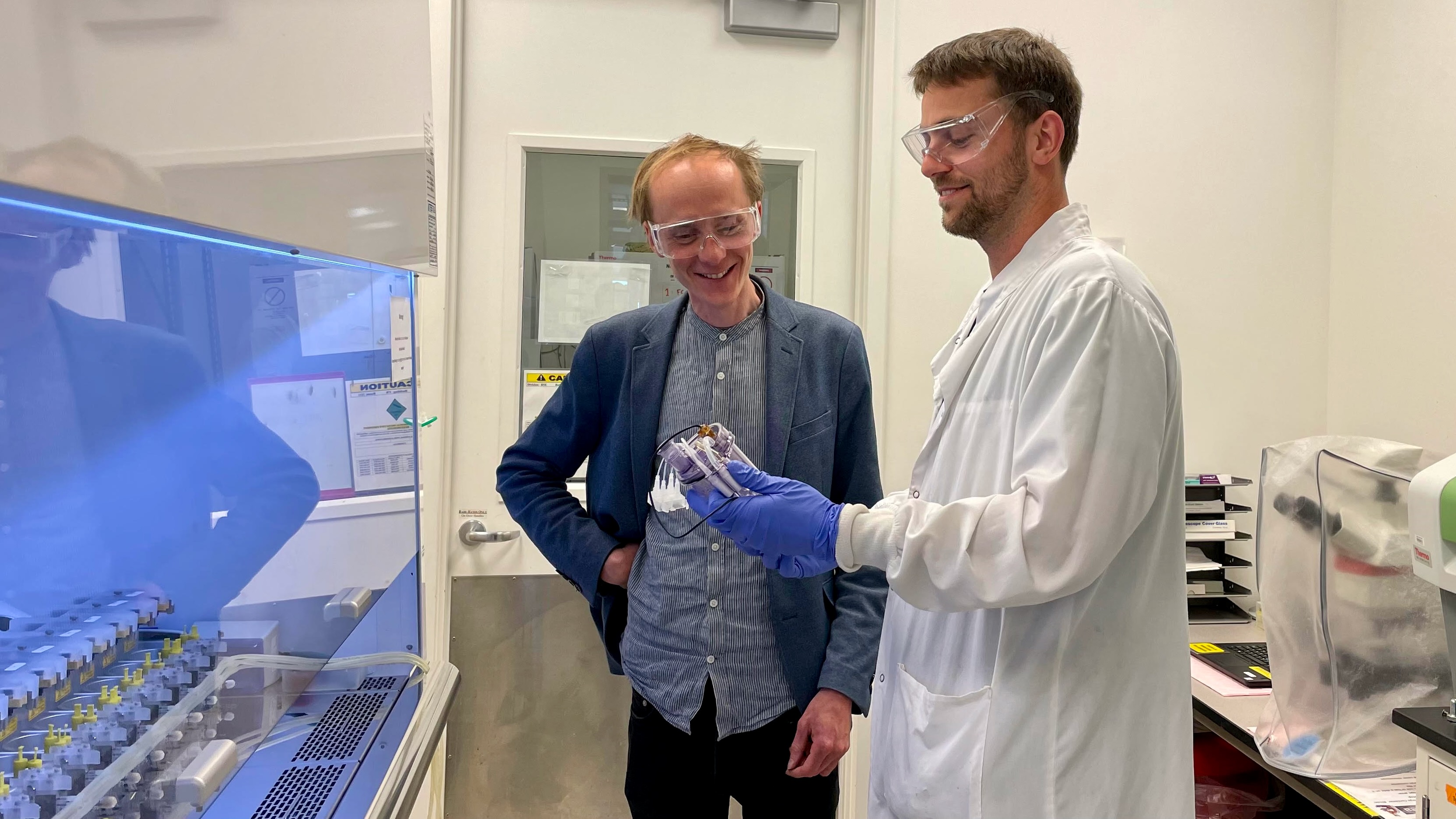
A universal challenge in biological manufacturing is the decline of cell productivity with scale and time when commercializing bioprocesses that generate valuable bio-based products. In large-scale settings, cells often stop producing the target product, limiting the efficiency of existing bioprocesses and the introduction of new bioproducts.
Now, researchers at the U.S. Department of Energy (DOE)-supported Agile BioFoundry (ABF) and Advanced Biofuels and Bioproducts Process Development Unit (ABPDU), and the biomanufacturing company, Enduro, are uncovering what happens with cells in larger bioprocesses through whole-genome DNA sequencing.
In 2023, ABF, ABPDU and Enduro completed a validation study of a technology that can effectively sustain bioproduction over long periods of time, solving the cell productivity problem. The technology, called Enduro Sense, uses biosensors to monitor the state of production and ensures that only highly productive cells are maintained in the bioprocess.
“If a cell stops generating product, which happens over time, Enduro Sense slows this cell down so it doesn’t grow as fast,” said Peter Rugbjerg, founder and chief scientific officer of Enduro. “This keeps the culture composition dominated by the highest producing cell variants and often provides a 20-30% production uplift.”
Bioprocesses can rapidly cease production at large manufacturing scales due to genetic and non-genetic cell variation. In this project, the researchers investigated the “genetic escape modes” present in bioprocesses — the methods through which cells stop producing. They identified a list of mutations that impacted the production of the secreted target product, cow’s milk beta-lactoglobulin (a whey protein and an important component of whey cheeses like ricotta). Such a demonstration allows for transferring this technology to energy-dense molecules.
Working with the microbial host Bacillus subtilis, they characterized the problem of productivity loss that occurs when cells mutate in large-scale fermentation settings.
“We showed how the escape modes were not only targeted to production genes, but were also found in global regulatory and secretion genes in the strain,” Rugbjerg said. “This meant there wouldn’t be a simple genetic fix such as additional gene copies to prevent production decline. It called for problem-agnostic, top-down solutions like Enduro Sense.”
After testing in the Ambr® 250 system at ABPDU, the B. subtilis process was scaled to a 300 L fed-batch fermentation. The team compared the use of Enduro Sense with an ancestral strain lacking the technology.
The ancestral strain accumulated mutations that nearly stopped production at 300 L scale, confirming productivity loss during scale-up. By contrast, the strain equipped with Enduro Sense delivered a 600% improvement in production, maintaining output through the end of fermentation.
“These demonstrations in 2022–2023 were our first tests in other microbial hosts and at a third-party scale-up facility, and they succeeded very well,” Rugbjerg said. “Now with whole-genome sequencing data, we can better explain why.”
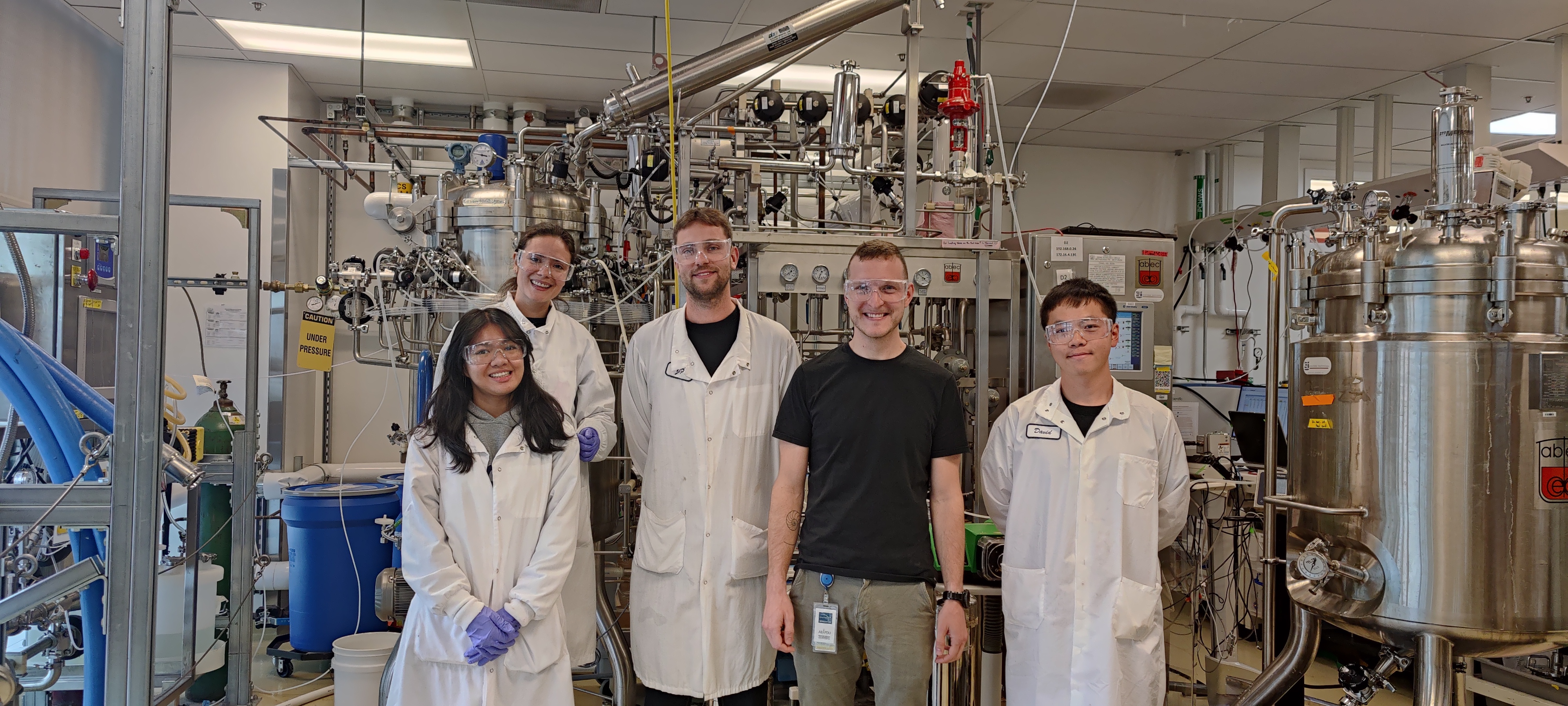
“In the early years of developing Enduro Sense for large processes, collaboration with innovative partners was crucial,” Rugbjerg added. “The ABF and ABPDU teams fostered a mindset of innovation at representative and actual downscales, something the industry often cannot attempt at full manufacturing scale.”
With validation in B. subtilis, Enduro has since extended the technology to other microbial hosts including Escherichia coli and yeasts such as Saccharomyces cerevisiae and Pichia pastoris. The company is now partnering with industrial players to implement the technology in bioproduction.
“Our partners today operate excellent industrial fed-batch processes, where 20–30% improvements can have significant impact,” Rugbjerg said. “In stable processes, Enduro Sense typically boosts yields by 20–30%. In continuous processes, long-term genetic stability can take productivity from zero to sustained week-long runs.”
Rugbjerg noted that collaboration with ABF and ABPDU was pivotal to Enduro’s growth, a journey that includes the company’s recent €12 million Series A funding.
“This project came at an important early time for us,” Rugbjerg said. “The result from this collaboration has been very helpful on our continued journey becoming what we are today. Working with world-class companies in this industry today is also thanks to the results of this collaboration.”
“Biomanufacturing companies in the United States, and the U.S. economy more broadly, will benefit from this project as we were able to demonstrate the maintenance of cellular productivity throughout the fermentation process,” said Nathan Hillson, PI of the ABF. “This technology is highly applicable to the domestic manufacturing of energy-dense molecules from local and rural feedstocks.”
The ABF and ABPDU are supported by the DOE’s Bioenergy Technologies Office.